Whether your business is big or small, paid search marketing allows you to shout “Hey, Look Over Here!” so you can drive traffic to your website or app, regardless of how highly you rank in ordinary search engine result pages (SERPs).
In this blog, we’ll cover everything you need to know about paid search, from what paid search is to why paid search is important. We’ll cover whether paid search agencies are worth it and whether it’s right for your marketing strategy. Let’s get into it…no shouting required.
What is paid search marketing?
According to recent research, there are around 16.4 billion searches on Google every day – that’s an incredible number! The results that appear at the top of these searches are what search engines think are the most relevant for the user, based on how authoritative, reliable and popular they are. Appearing as one of these top ranking pages can be a challenge, and that’s something most try to achieve through search engine optimisation (SEO).
But above these organic results, you’ll also see websites which have paid to jump to the top – sort of like a fast pass to the front of the queue. This is Paid Search Marketing.
It’s an excellent means of quickly driving more traffic to your site because it puts your ad directly at the top of the SERPs as one of the first results a user sees – no matter if other sites are more ‘authoritative’ than you. This increases your brand awareness and the likelihood of users clicking on the ad as your business will be seen at a crucial time in their decision-making period.
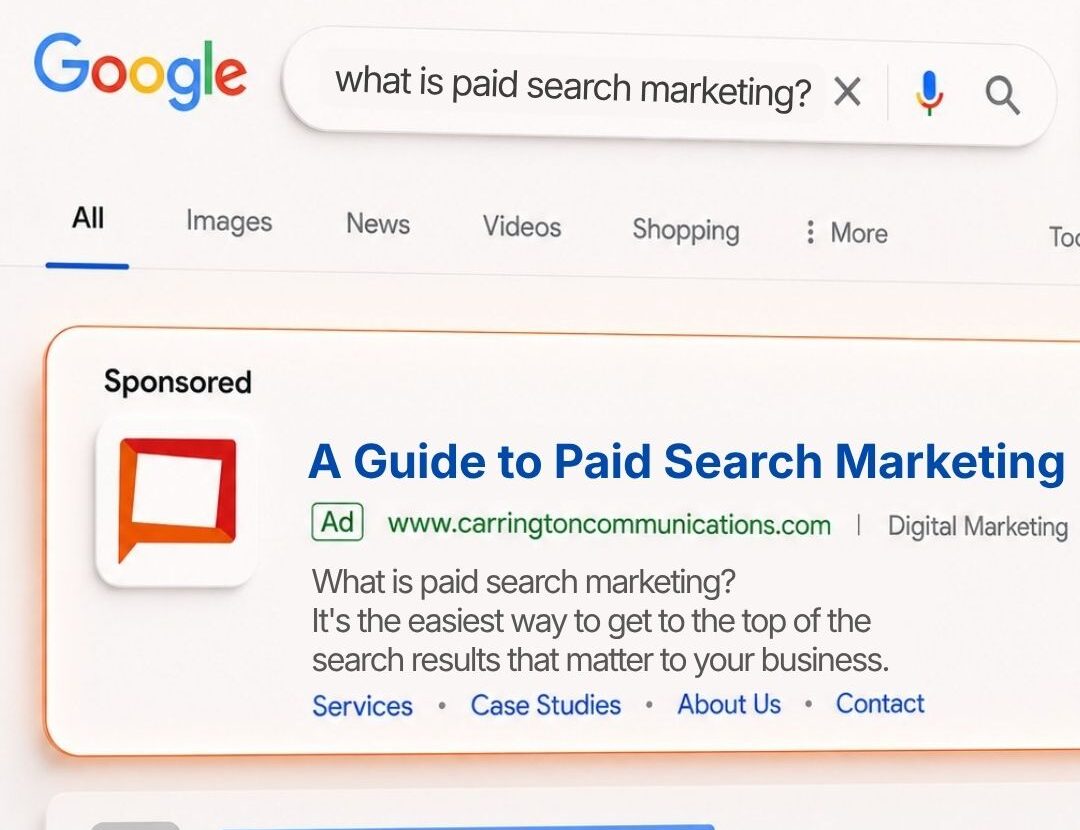
You’ll often see paid search named PPC or pay per click, which describes the way that you’ll pay for this kind of advertising: you pay the search engine a sum of money every time someone clicks on your ad. This means there’s a direct connection between what a campaign costs and what it delivers for your business, but there are a lot of variables that determine the fee.
Why is paid search important for business?
Being shown at the top of relevant search results can increase brand awareness, drive clicks, generate leads and convert them into e-commerce sales so it can have a huge impact.
Once launched, you get immediate insights into each campaign’s performance – no waiting weeks to find out if your ad is a hit or a flop. This enables you to tweak your adverts and optimise them to improve performance or adjust the ongoing strategy for your business.
Basically, paid search is an excellent way to reach your customer at the exact moment they are searching for relevant products or services and it can help you learn more about customer behaviour and actions to feed back into your overall marketing strategy.
How to plan a PPC campaign
While search advertising can be very effective, you can’t go in without a plan…and we all love it when a plan comes together.
Start by considering your goals: Are you wanting to cast a wide net and shout about your brand to anyone who’ll listen? Or dial into a niche market and speak directly to the people who are already halfway to buying? There are benefits and drawbacks in all of the campaign options the search platforms have available, so you need to work out what’s best for your business focus.
The next step would be to check out the current market: Think carefully about the customer you want to reach, and what they will be searching for when you want to reach them. You should use the keyword planner tools available within each platform to find the words and phrases people will search to come across your adverts. And to decide which platform will best suit your needs.
Take the time while using these tools to note down the projected costs and competitiveness of your chosen keywords because some keywords cost more than others and this may impact your budget decisions.
How to structure your paid search campaigns
Once you have planned out your campaigns, it’s time to think about the structure you want to deploy. Look at your keywords and split them out into tightly knit groups based on their search intent and potential landing pages. Think branded terms together, one service per ad group, only one product range per group, etc – these are your Ad Groups.
Top tip: Remember that you can only set budgets at campaign level, not Ad Group level, so think about splitting out important ad groups into separate campaigns to ensure they have dedicated spend.
Once you have your keywords, consider which match type you think would be best to use:
- Exact Match: Your keyword typed in word-for-word
- Phrase Match: Ads may show on searches including your complete keyword
- Broad Match: Ads may show on searches related your keyword
Broad match is generally recommended by Google, as is AI-Max, but these AI solutions are not always suitable options. Consider the types of searches that may be included within each match type, how niche your audience is and how far down the funnel you are aiming.
Finally, make sure you tailor your ads to the keywords in each ad group. Keep an eye on the Ad Strength and assess any recommendations by the platforms to improve ads with add-ons and more keyword mentions.
How to manage your paid search campaigns
Like most things, Paid searches require close attention during their learning stages, mostly because you’ll want to ensure that your chosen keywords are delivering profitable results.
There are a number of key factors to monitor and optimise when managing your campaigns, including:
Search terms
Take a regular look at your search term report for each ad group – these are the paid searches or terms your ad has shown up for. Assess what paid search terms align with your expectations? Are they relevant and optimal for the Ad Group? You may need to consider adding some of the less suitable ones to your negative keyword list. Or, if that doesn’t help, reevaluate your chosen match types.
Conversion quality
It’s important to ensure that your paid searches return the value (or Return On Ad Spend – ROAS) you need to make them worthwhile. This can be easy to decipher if you are running ads for e-commerce products but can be a little more ambiguous if you are collecting leads. Be sure to work through a sample of your leads regularly to ensure that they are of high quality.
Keyword quality score
Quality score is a slightly mysterious /10 metric Google uses to rank your ads…think of it like a report card only Google gets to see. Google combines this ranking with your bid to decide your cost-per-click and position in the SERPs for your chosen keywords. To bring down your CPC, focus on the quality and relevance of your ads to your keywords and your landing page content.
Do you need a paid search agency?
Although you can manage your own paid search marketing, there is a lot to bear in mind and you should keep a close eye on your campaigns and their performance. All these moving parts and consistent checks can be time consuming and unnerving. A paid search agency takes the load off. With dedicated PPC Specialists who have the knowledge and experience right off the bat to help, combined with your product or service expertise, your paid search marketing campaigns can be up and running in no time.
At Carrington, we have a dedicated team who specialise in paid search management services, helping your campaigns to be as cost effective and impactful as possible so your money goes much further.
You can find out more about how we can help as a paid search agency here, or get in touch to find out how we can help your business.