Finding out what your closest competitors are up to can be a key factor when developing a marketing plan. Well, curtain twitchers can rejoice as the Google Ad Transparency Centre launched in the UK in 2023, and since then, we’ve all been able to satisfy our need to nosy at other people’s work.
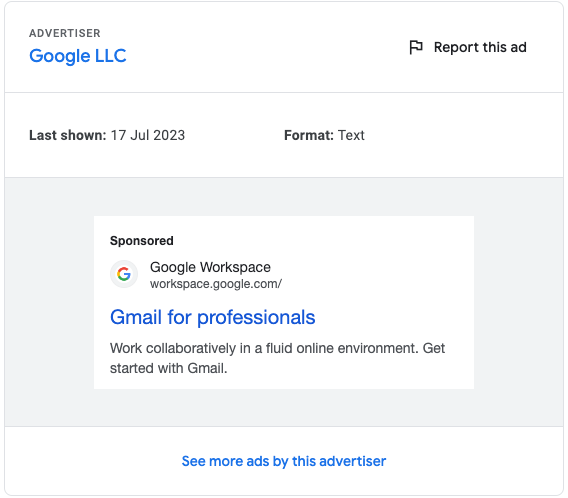
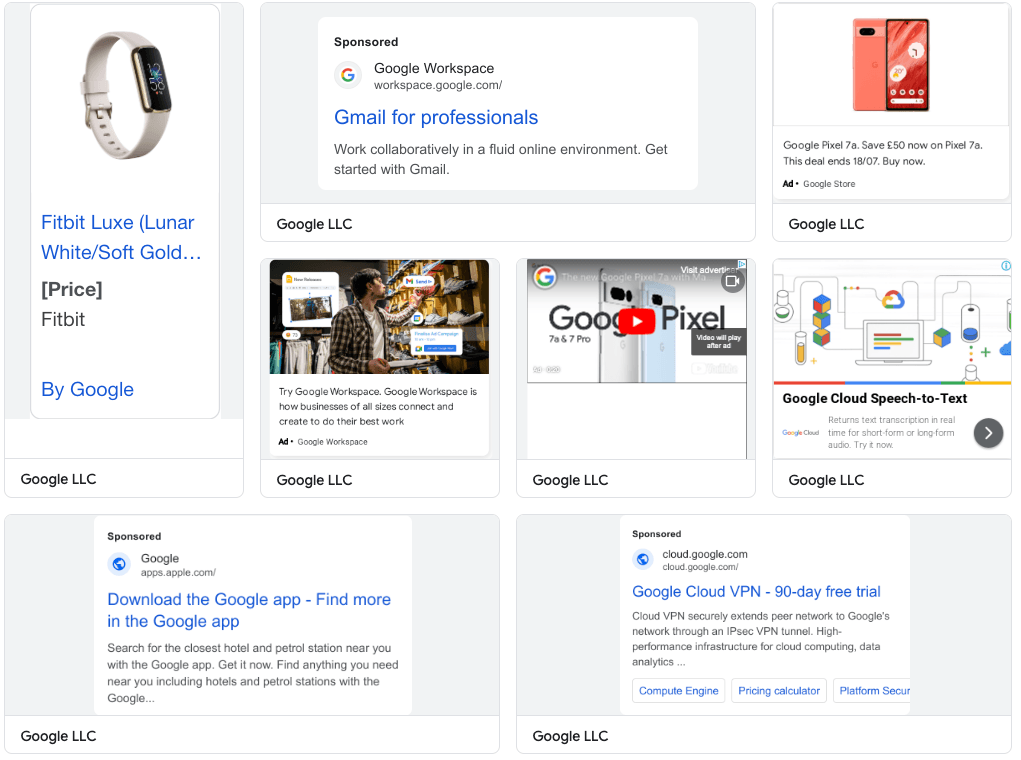
This much-loved feature allows users to rummage through competitors’ Ads libraries, including details on search, display and video ads. Simply visit adstransparency.google.com and search by business name or URL. If they are running ads, you’ll be able to see them all listed for anyone to see in the Google Ads Transparency Centre.
Why does this matter?
If most of your competitors are running ads, Google ads transparency centre offers you clarity. It can help you determine whether paid search is right for your business, undertake market analysis and find gaps in the market. If you do decide to pursue advertising on Google Ads, you’ll also have some great inspiration when developing your assets.
Already running paid search ads? Use the Ads Transparency Centre to take a peek at your competition! See if there is anything you can learn from what they’re doing right now.
Even if you don’t run Google Ads, this feature is a great way to keep competitors in check. You can regularly monitor their activity and ensure that they aren’t using underhand tactics or inauthentic claims to undermine your marketing efforts.
The downsides of Google Ads Transparency Centre
Despite the name, transparency isn’t Google’s style. Despite Responsive Search Ads and Performance Max being staples of Google’s search infrastructure, they are not properly identifiable in the ad transparency centre. Instead, only the top 2/3 headline and description options are shown, and it’s not clear what campaign type the ads are running from. In classic fashion, it leaves a lot of information hidden behind closed doors.
We’d love to see more information from Google. Call us greedy, but more detail on competitor keywords and targeting would really take this tool to the next level. For example, in 2023, Meta’s similar tool – the Facebook Ad Library – became more transparent in the EU by sharing location, age, gender and reach data for each ad in accordance with the Digital Services Act, which really helps with strategy and planning.
Another downside is the fact that spying in this way is a two-way system. In just the same way that you can see your competitor’s ads, they can see yours and so can anyone else who cares to look.
Some may approach this tool with trepidation; your instinct may be that you’d rather keep the scale of your advertising a secret. Unfortunately, there’s no opt-out – this feature is a necessary evil in a digital world revolving around data protection and anti-discrimination.
This puts the focus on clarity, placing greater emphasis on the need to maintain an ethical and accurate Google Ads library. Providing these core values are maintained, we feel the Google Ads Transparency Centre is a tool to embrace.
At Carrington, we use the Google Ads Transparency Centre across our client accounts to make more informed decisions when optimising ad copy and strategising campaigns.
Looking for help with your paid search marketing? We can help! Get in touch today.